httype#
⛓️ Type-safe HTTP client/server communications with awesome autocompletion
Let your compiler tell you when you break a contract with your client.
Features#
✅ Awesome autocompletion and type safety for request parts
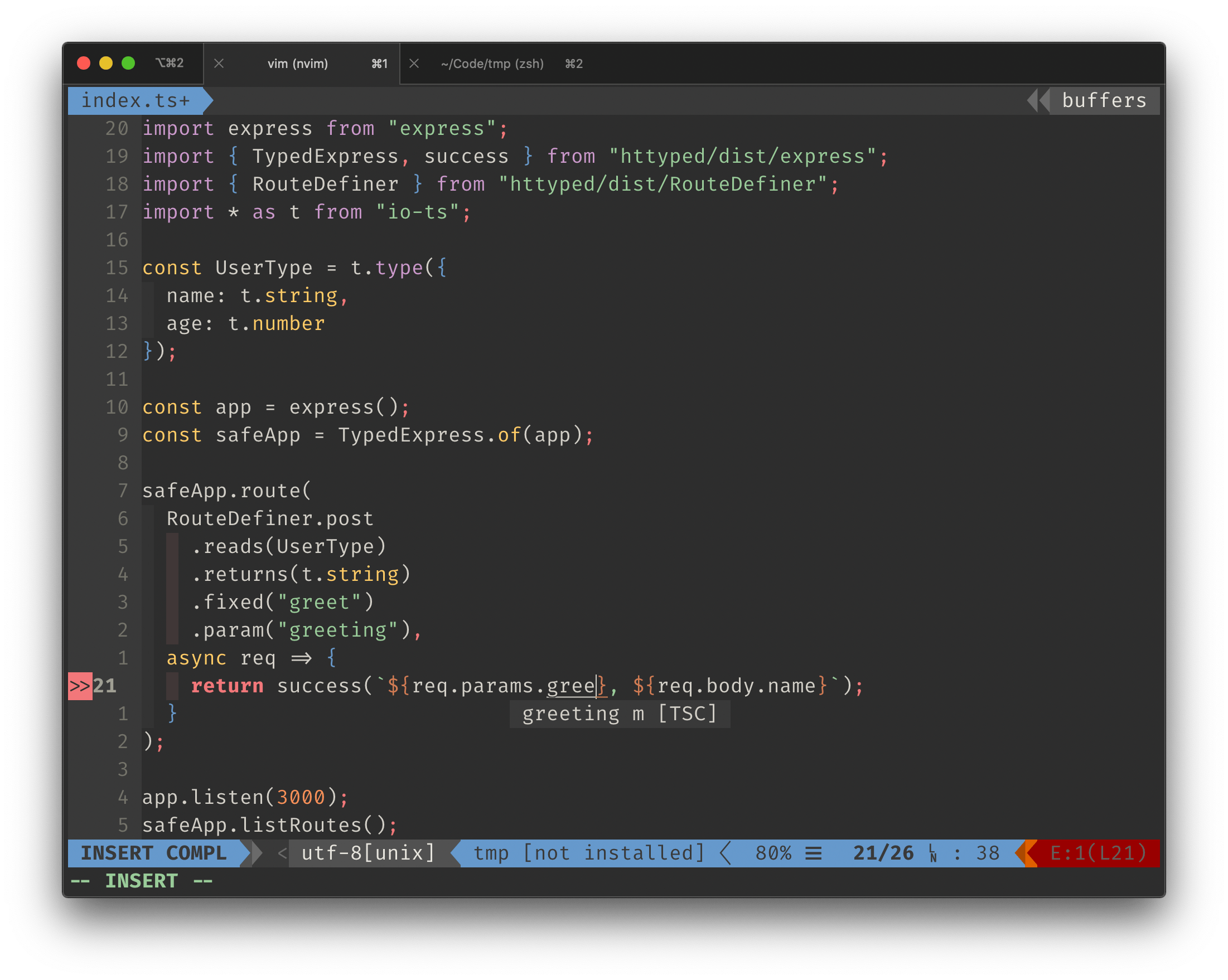
✅ Nice and simple route documentation

✅ Compile time and runtime type validation
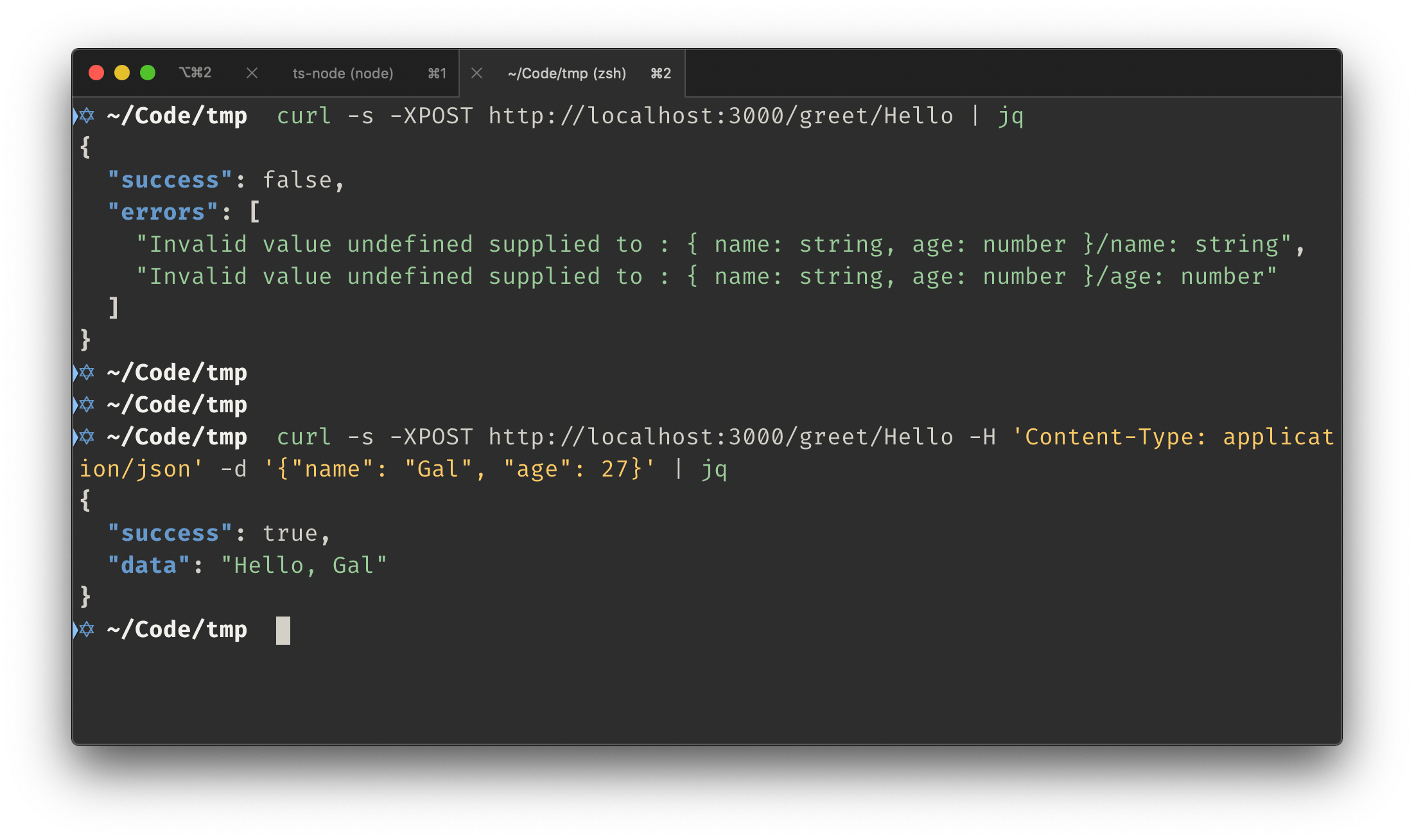
Usage#
Route#
A route is defined by RouteDefiner. This part is shared for both server and client.
✅ Supports dynamic parameters
✅ Supports a typed request body with io-ts
✅ Supports a typed response type with io-ts
Examples:#
-
A
GETroute that returns astringoutput, with a fixed path of/hello:RouteDefiner.get.returns(t.string).fixed("hello"); -
A route that returns a
stringoutput, with a dynamic path of/hello/:name:RouteDefiner.get .returns(t.string) .fixed("hello") .param("name"); -
A
POSTroute that reads a custom typeUserfrom the request body and returns a custom typeGreeting:const Greeting = t.type({ msg: t.string }); const User = t.type({ name: t.string }); RouteDefiner.post .reads(User) .returns(Greeting) .fixed("user-to-greeting");
Server#
Implementation for servers is by wrapping Express.js
✅ Type safe body parsing, thanks to io-ts
✅ Awesome autocompletion for routing params and request body
✅ Pretty routing table, documentation ready
import { TypedExpress, success } from "httyped/express";
import express from "express";

const app = express();
const typed = TypedExpress.of(app);

typed.route(
  RouteDefiner.get // a get request
    .returns(t.string) // that returns a string
    .fixed("hello") // and its path is
    .param("name"), // `/hello/:name`
  async req => {
    return success(`Hello, ${req.params.name}`);
  }
);

app.listen(3000);
typed.listRoutes(); // Will print a table of routes
Client#
A http client based on node-fetch:
✅ Type-safety between client and server
✅ Autocompletion for request parameters and request body
import { fetcher } from "httyped/fetch";

const User = t.type({ name: string }, "User");

// given a route
const route = RouteDefiner.post
  .reads(User)
  .returns(t.string)
  .fixed("hello")
  .param("greeting");

const fetch = fetcher(route, "http://localhost:3000");
//                           ^ the base URI

const { status, data } = await fetch({
  params: {
    greeting: "Hello"
  },
  body: {
    name: "Gal"
  }
});